

Macular Degeneration Treatment Perth
What is macular degeneration
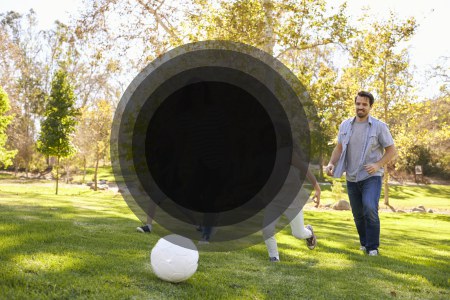
Macular degeneration typically causes progressive loss of central vision, leaving the peripheral or side vision intact.
It may affect your ability to read, drive, recognise faces and perform activities that require detailed vision.
Macular degeneration is usually related to ageing and most frequently affects people over the age of 50. It’s not a normal or inevitable consequence of ageing. Certain forms of the disease can also affect younger people.
Macular degeneration is progressive and painless and although it can lead to legal blindness, it does not result in total or ‘black’ blindness.
|
Normal vision |
Macular degeneration |

Macular degeneration facts
Macular degeneration, also known as age-related macular degeneration, is the leading cause of legal blindness and severe vision loss in Australia, responsible for 50% of all cases of blindness.
Macular Disease Foundation Australia.
Symptoms of macular degeneration
The common symptoms of macular degeneration may include:
-
- A gradual decline in the ability to see objects clearly
- Distorted vision
- Dark or empty spaces blocking the central field of vision
- Difficulty with light or dark adaptation
- Dimming of colour vision
MACULAR DEGENERATION – EARLY DETECTION IS VITAL
The earlier that macular degeneration is detected the earlier that steps can be undertaken to help slow its progression and save sight through treatment and/or lifestyle modifications.
Difficulty with vision should never be dismissed as just a part of getting older. In its early stages macular degeneration may not result in noticeable visual symptoms but it can be detected with an eye test.
Two types of macular degeneration
There are two types of macular degeneration:
Dry – Dry macular degeneration results in a gradual loss of central vision. There is currently no treatment, but diet and lifestyle approaches may help slow the disease progression and vision loss.
Wet – Wet macular degeneration is characterised by a sudden loss of vision and is caused by abnormal blood vessels growing under the retina. There are a number of treatments available for wet macular degeneration. While these treatments cannot cure the disease, they aim to stabilise and maintain the best vision for as long as possible. In some people, treatment may improve vision.
Macular degeneration treatment
Dry macular degeneration
Whilst there are no current treatment for dry macular degeneration, dietary and lifestyle changes may slow the disease, including increased consumption of:
-
- Green leafy vegetables
- Fruits
- Fish
- Omega oil tablets
- Nuts
- Multivitamin tablets rich in vitamins A, C, E, Zinc, Selenium and Beta-carotene.
Lifestyle changes that may help also include physical exercise, wearing protective sunglasses and a hat when outdoors, cease smoking and controlling high blood pressure and cholesterol levels.
Wet macular degeneration
There are a number of medical treatments available for wet macular degeneration. These treatments do not cure the disease but aim to stabilise and maintain the best vision for as long as possible. In some people, treatment can improve vision.
Treatments may include one or a combination of the following depending on your specific symptoms and diagnosis:Intravitreal Anti-VEGF injection therapy – A protein called Vascular Endothelial Growth Factor (VEGF), is predominantly responsible for the growth of new blood vessels that result in rapid and severe vision loss, which if left untreated, becomes permanent.
To slow or stop VEGF, various drugs may be injected into the eye that may help block the protein.
Macumira treatment
MacuMira is a non-invasive, painless microcurrent therapy designed to treat dry Age-Related Macular Degeneration (AMD). It delivers gentle, low-level electrical stimulation through closed eyelids to stimulate retinal cells, which boosts mitochondrial energy (ATP) production and helps the eyes clear cellular waste.
How It Works
The Mechanism: Instead of drugs or injections, MacuMira uses soft eye cups placed over the closed eyelids to pass a patented microcurrent waveform into the eye.
Cellular Benefits: The microcurrent stimulates retinal pigment epithelium (RPE) cells. This enhances mitochondrial activity, increases ATP production, and improves cellular “cleanup” of by-products like drusen that degrade vision.
The Process: A standard treatment course is non-invasive and relaxing; many patients read or nap during the 32-minute session.
Treatment Schedule & Results
Loading Phase: Typically involves four 32-minute sessions conducted over a roughly 10-day period.
Maintenance: Patients usually return to their local clinic for follow-up sessions every 3 months to maintain the vision improvements.
Outcomes: Clinical results have shown that patients can experience improved visual acuity (clarity) and better contrast sensitivity relatively quickly. [
Availability
MacuMira is a TGA-approved Class II medical device in Australia and is also licensed for use in Canada and New Zealand. It is commonly offered by optometrists and ophthalmologists as part of a comprehensive AMD management plan.
Photobiomodulation
Photobiomodulation (PBM) is a non-invasive treatment for dry age-related macular degeneration (AMD) that uses specific wavelengths of red and near-infrared light to stimulate cell function. It aims to enhance cellular energy, reduce inflammation, and slow the progression of vision loss in early and intermediate stages without surgery or injections.
How PBM Works
Cellular Stimulation: Low-level light therapy stimulates the mitochondria (the “power plants”) in the cells of the retina, encouraging them to produce more energy (ATP).
Targeted Light: The treatment uses a combination of yellow, red, and near-infrared wavelengths (typically between \(590\) and \(850\) nm).
Tissue Repair: This targeted light exposure helps manage oxidative stress and reduces the build-up of drusen (protein deposits) under the retina, which are a hallmark of AMD.
The Treatment Experience
Non-Invasive: Patients sit in front of a specialized PBM device (like the Valeda Light Delivery System) that delivers gentle pulses of light to the eye.
Short Sessions: A typical session lasts only a few minutes.
Series of Treatments: Patients usually require a series of sessions—often a few times a week over several weeks—to see noticeable effects, with potential for maintenance treatments required later.
Potential Benefits
Vision Improvement: Clinical trials (such as the LIGHTSITE III study) have shown that PBM can improve visual acuity and contrast sensitivity in some patients.
Slowing Disease Progression: The therapy may help delay the transition from intermediate dry AMD to late-stage geographic atrophy. [1]
Safety: Unlike treatments for wet AMD, which typically involve intraocular injections, PBM is painless and does not cause thermal damage to the retina
Help centre – About ANTI-VEGF Treatment
Our doctors use a range of ANTI-VEGF medications given as quick sterile injection therapy into the eye to reduce new leaky blood vessel growth and/or swelling under the macula area of the retina.
This treatment may reduce the risk of scarring and retina damage and may also prevent further vision loss. In some patients an improvement in vision is possible.
Your ophthalmologist will discuss the prognosis, risks and benefits of the treatment options with you in more detail.
Photodynamic therapy (Visudyne) – Is a two-step treatment that uses:
(a) A light-sensitive drug which gets absorbed into the abnormal blood vessels in your eye and;
(b) A special laser shined into your eye that activates the drug and helps break up the abnormal blood vessels in your eye that is inhibiting your vision.
At WA Eye Specialists
We undertake special investigations to help determine whether or not treatment with Anti-VEGF or other treatment options are right for your specific eye condition including:
Fundus Fluorescein Angiography (FFA) – FFA provides a picture of the layer of blood vessels underneath the retina and shows where the leaking vessels are using rapid serial photographs of a dye injected into your arm.
Heidelberg Spectralis multicolour Ocular Coherence Tomography (OCT) – Provides a cross-sectional image which shows the layers of the retina centred around the macula. It can be used to diagnose swelling and new blood vessel growth in the macula and compare before and after treatment effectiveness in reducing swelling or new blood vessel growth.
If you have any questions or would like to book an appointment please contact us:
Macular Degeneration Treatment Perth
Our specialist eye doctors see patients from all over Western Australia. They have extensive experience in the diagnosis and treatment of a wide range of eye conditions including Macular Degeneration. WA Eye Specialists have four practices located in Perth in Armadale, Joondalup, Midland, Murdoch and South Perth.